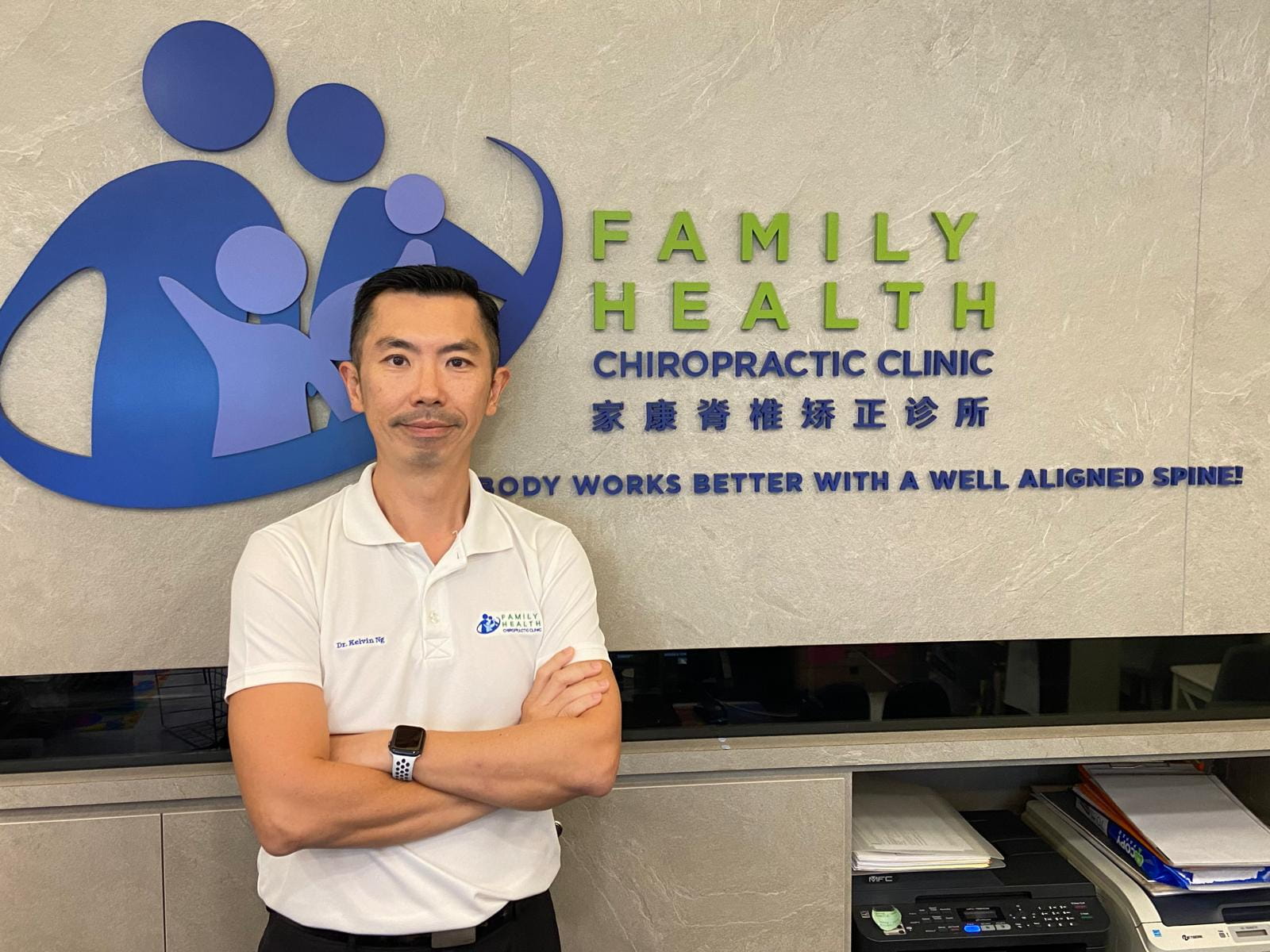
We Normalised the Pain. That Was Our First Mistake.
I see it every week in my clinic. A patient walks in, usually mid-30s to mid-50s, works in a CBD office, and opens with the same phrase: "I've had this neck thing for years."
Years. Not weeks. Not months. Years of waking up stiff. Years of that headache that shows up every Tuesday after back-to-back Zoom calls. Years of rubbing the right shoulder without knowing why it never fully goes away.
And when I ask them when they last saw anyone about it, most say they haven't. Because they assumed it was just part of working life in Singapore.
Here's what a recent Singapore General Hospital study found: 73% of local office workers suffer from neck, shoulder, or back pain — a figure that sits well above the global average. Let that sink in. Nearly three in four people in Singapore's offices are carrying pain with them to work every single day.
This isn't a coincidence. This is a pattern. And patterns have causes.
Singapore's Perfect Storm for Spinal Problems
We have, without quite realising it, built a lifestyle that is almost perfectly engineered to destroy the spine. Think about what a typical Singapore office worker's day looks like:
- 6:30am — Wake up and scroll through your phone in bed before getting up. Neck flexed, head forward.
- 8:00am — MRT commute, head tilted down at the phone. For every degree the head tilts forward, load on the neck increases dramatically.
- 9:00am – 6:00pm — 8 to 10 hours at a desk, often with a screen too low, a chair too high, and zero reminders to move.
- 7:00pm — Dinner with the phone propped up or laptop open. Still forward, still flexed.
- 10:30pm — Scrolling in bed again before sleep. The spine never fully decompresses.
That's not a bad day. That's just Tuesday. Now repeat that for five days a week, 48 weeks a year, and you start to understand why the numbers look the way they do.
The body is incredibly adaptive — but it adapts to what you repeatedly do to it. And what we are repeatedly doing is loading the cervical spine in flexion, compressing the lumbar discs in a seated position, and training the deep postural muscles to switch off.
When you tilt your head 60 degrees to check a WhatsApp message, you are putting the equivalent of 27kg of force on your neck. Your head weighs 5kg. That extra load? Your muscles and joints are absorbing it — silently, every time.
— Biomechanics of Forward Head PostureIt's Not Just About the Pain. It's About What the Pain Is Signalling.
Here is what I want every Singapore office worker to understand — and what most people are not being told: Pain is a late warning signal.
By the time your neck hurts, your shoulder aches, or your lower back seizes up on a Monday morning, the structural dysfunction has usually been brewing for months — sometimes years. The muscles have already compensated. The joints have already started to stiffen. The nerves may already be under low-grade irritation.
We live in a culture that treats pain reactively. Panadol when it flares. A massage when it gets unbearable. A two-week MC and some physio if it gets serious enough. But none of those address the reason the pain keeps coming back. That reason, in the vast majority of office-related cases, comes down to three things:
- Forward Head Posture (FHP) — The head migrates forward from the shoulders. For every inch of forward shift, the effective load on the spine doubles. Most office workers I screen are carrying 2–3 inches of forward displacement.
- Spinal Subluxation — Vertebrae that are not moving properly create friction, nerve irritation, and compensatory muscle tension throughout the entire spine. This is not something a massage can correct.
- Neurological Interference — When the spine is misaligned, the nervous system — which runs through and out of it — is compromised. That's why people with neck issues often also report fatigue, brain fog, poor sleep, and digestive irregularities.
Are You Already There? A Quick Check.
Before you tell yourself this doesn't apply to you, run through this honestly:
- I wake up with neck or shoulder stiffness more than twice a week
- I get headaches that seem to originate at the base of my skull
- My lower back aches after sitting for more than 2 hours
- I catch myself slouching or hunching at my desk without realising it
- I have one shoulder that sits noticeably higher than the other
- I feel tightness or tension between my shoulder blades regularly
- My pain eases briefly with massage or rest — but returns within days
If you checked three or more, your body has been trying to tell you something for a while. The question is whether you are ready to listen — or whether you will keep normalising it for another year.
What Nobody's Telling Singapore's Office Workers
Pain medication manages symptoms. Massage relaxes muscles temporarily. Ergonomic chairs reduce load — but only if the spine underneath is already aligned correctly.
What is consistently missing from the conversation is this: the spine needs to be assessed and corrected at the structural level.
Chiropractic care — specifically, precise, instrument-assisted spinal assessment and adjustment — addresses the root cause of most office-related musculoskeletal pain. Not by forcing the body into position, but by restoring the natural movement and alignment of the vertebrae so the nervous system can function the way it was designed to.
In my 16 years of practice, I have worked with executives, teachers, engineers, nurses, and hawker stall owners. The common thread among those who get lasting relief is not the modality they tried — it is whether they addressed the underlying structural problem or just managed the surface symptoms.
Three Things Worth Starting This Week
1. Reset Your Screen Height
The top of your monitor should be at eye level. If you are looking down at your screen — whether a laptop or a phone — you are loading your cervical spine with every minute that passes. A laptop stand and external keyboard cost less than one massage.
2. Do the Chin Tuck, Daily
Sit upright, pull the chin straight back (not down), hold for 5 seconds, repeat 10 times. It activates the deep cervical flexors that most office workers have switched off entirely. Do it at your desk, in the MRT, or while waiting for your kopi.
3. Get Your Spine Assessed — Not Just When It Hurts
You service your car on schedule, not just when the engine light comes on. Apply the same logic to your spine. A proper structural assessment will tell you what is actually happening underneath — before it becomes a crisis that takes months to resolve.
The 27% of Singapore office workers who are not in chronic pain are not necessarily healthier. They may simply not have reached the threshold yet. The body is patient. The clock is not.
— Dr. Kelvin Ng, DCThe 73% Number Doesn't Have to Include You.
Singapore's office workers are among the most hardworking, high-performing people in the world. They deserve a healthcare conversation that is equally serious about prevention, not just crisis management.
Pain is not a badge of honour. It is not the price you pay for career success. And it is not something you have to just live with.
The 73% statistic is alarming. But what it really tells me is that the right information is not reaching the right people. My job — in this clinic, in these posts, in every corporate talk I give — is to change that.
If you're in the 73%, it's not too late to get out. And if you're not there yet, it's the right time to make sure you don't end up there.
Ready to Know What's Actually Going On With Your Spine?
A structural spinal assessment takes less than an hour and gives you a clear picture of where you stand — and what to do about it.
Book a Consultation via WhatsApp Send an Email